Skip to…
There are some places that feel built for a long stay. Ajaccio is not really one of them.
And oddly, that is part of its charm.
The capital of Corsica feels relaxed, walkable and easy to understand in a single day. You can swim in the sea, climb through Napoleonic history, eat extremely well, wander quiet streets lined with faded Mediterranean buildings and still feel like you have properly “done” the city before dinner.
For us, Ajaccio worked best exactly like that. A warm, easy-going one-day stop with excellent food, enough history to keep things interesting, and the sort of atmosphere that makes you slow down without really noticing.
First Impressions of Ajaccio
Ajaccio immediately feels softer and calmer than many Mediterranean port cities.
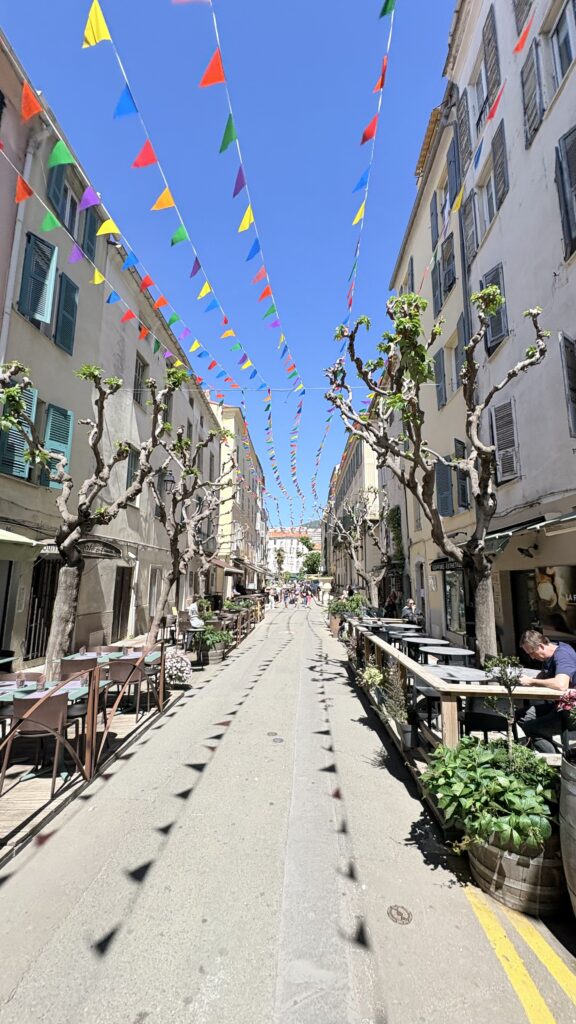
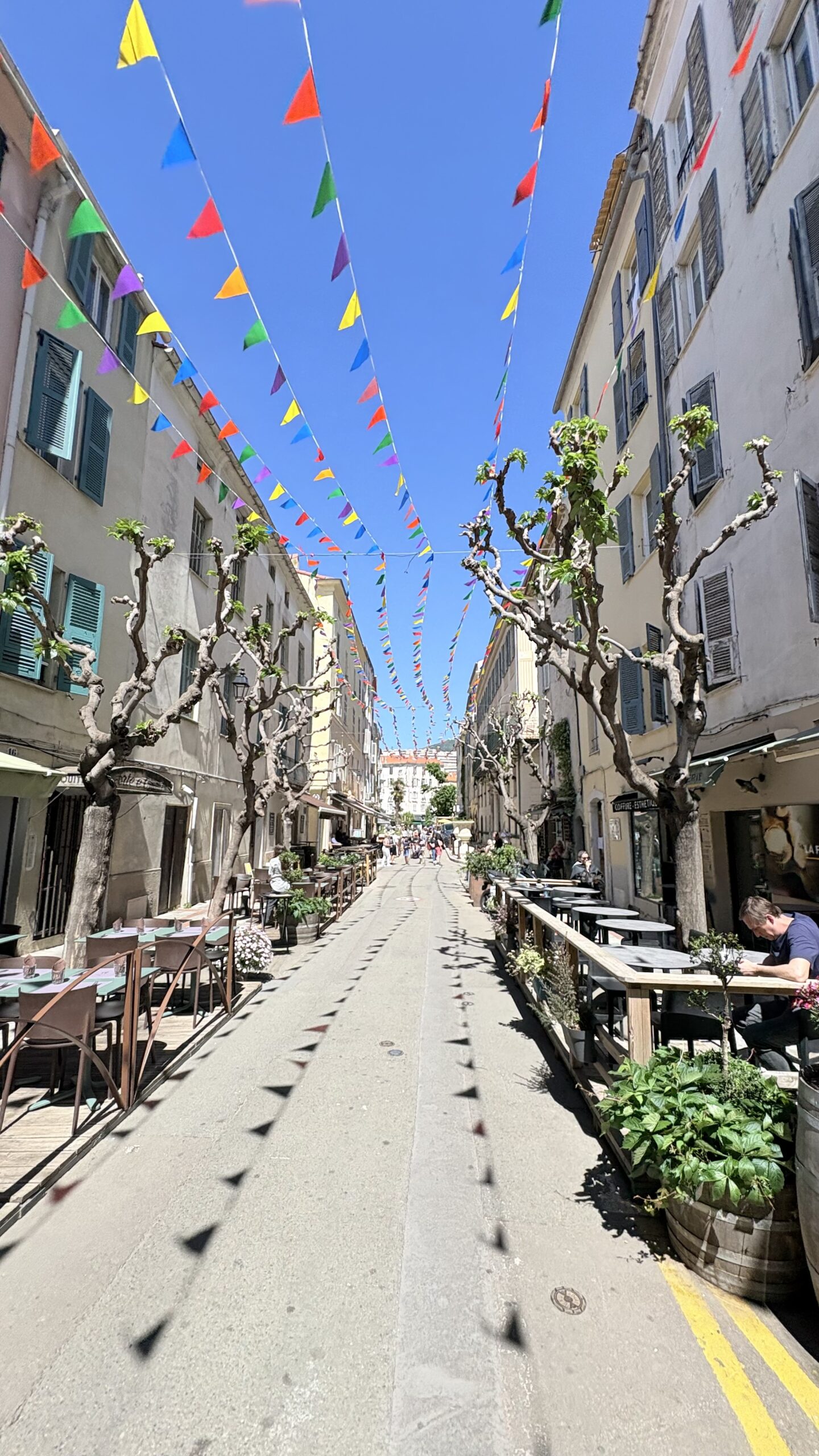
Large parts of the centre are pedestrianised, the streets are broad and airy, and there is a slightly faded elegance to the architecture that makes the city feel lived-in rather than polished for tourists. Pastel shutters, warm stone buildings and palm-lined squares give it an unmistakably southern feel, but without the intensity or crowds you sometimes get elsewhere on the French coast.
It is also remarkably walkable. We covered almost everything on foot during our visit, moving between the beach, old town, cathedral, market and waterfront without ever really needing to think about transport.
Ajaccio is, of course, heavily associated with Napoleon Bonaparte, who was born here in 1769. Even if you are not particularly interested in Napoleonic history, it is impossible to avoid entirely. Statues, plaques, museums and references to the Bonaparte family are woven throughout the city.
Thankfully, it rarely overwhelms the place itself.
A Small but Excellent Beach in the Centre of Town
One of the genuinely nice surprises about Ajaccio is how easy it is to combine a city visit with actual beach time.
We spent part of the day at a small central beach, which was compact but genuinely good. Calm water, warm weather and easy access from the town centre made it feel more practical and relaxed than some of the larger resort beaches elsewhere in Corsica.
That balance is probably one of Ajaccio’s strengths. You are never far from the sea, but the city still feels functional and lived-in rather than purely built around tourism.
For families especially, it works well. The pace feels manageable, distances are short, and there are enough cafés, open spaces and pedestrian areas to make wandering around fairly easy with children.
Climbing to Napoleon’s Monument at Place d’Austerlitz
One of the more memorable parts of the day was the climb up to the Napoleon monument at Place d’Austerlitz, often referred to locally as “Le Casone”.
The walk up is steeper than it first appears, particularly in the heat, but the views back across Ajaccio are worth it. At the top sits the large monument to Napoleon, completed in the 1930s, alongside references to his military victories and achievements.
Even as people who are not especially invested in Napoleonic history, it was impressive simply because of the scale and setting. Corsica’s relationship with Napoleon feels less like distant textbook history here and more like part of the city’s identity.
There is also something very Mediterranean about the whole experience. The climb, the heat, the sea views, the old trees lining the route. It feels more atmospheric than formal.
Ajaccio Cathedral and the Tribute to the Pope
Ajaccio Cathedral was another highlight.
Officially the Cathedral of Our Lady of the Assumption, the building dates largely from the late sixteenth century and was built during Genoese rule of Corsica. The interior is relatively modest compared with some grand European cathedrals, but that is part of its appeal. It feels intimate, warm and is still clearly very much used by the local community.
The cathedral is best known historically as the place where Napoleon was baptised in 1771.
When we visited, there was also a tribute connected to the Pope’s visit (he came in December 2024), which gave the space a more contemporary feeling alongside all the history. It made the cathedral feel active rather than purely historic, which suited the city itself.
The Food Market Was the Best Part of the Day
If there is one thing we would actively tell people not to miss in Ajaccio, it is the market.
The main indoor and surrounding market area near Place Foch is excellent. It feels genuinely local rather than overly curated, with stalls selling Corsican cheeses, cured meats, wines, preserves and regional produce.
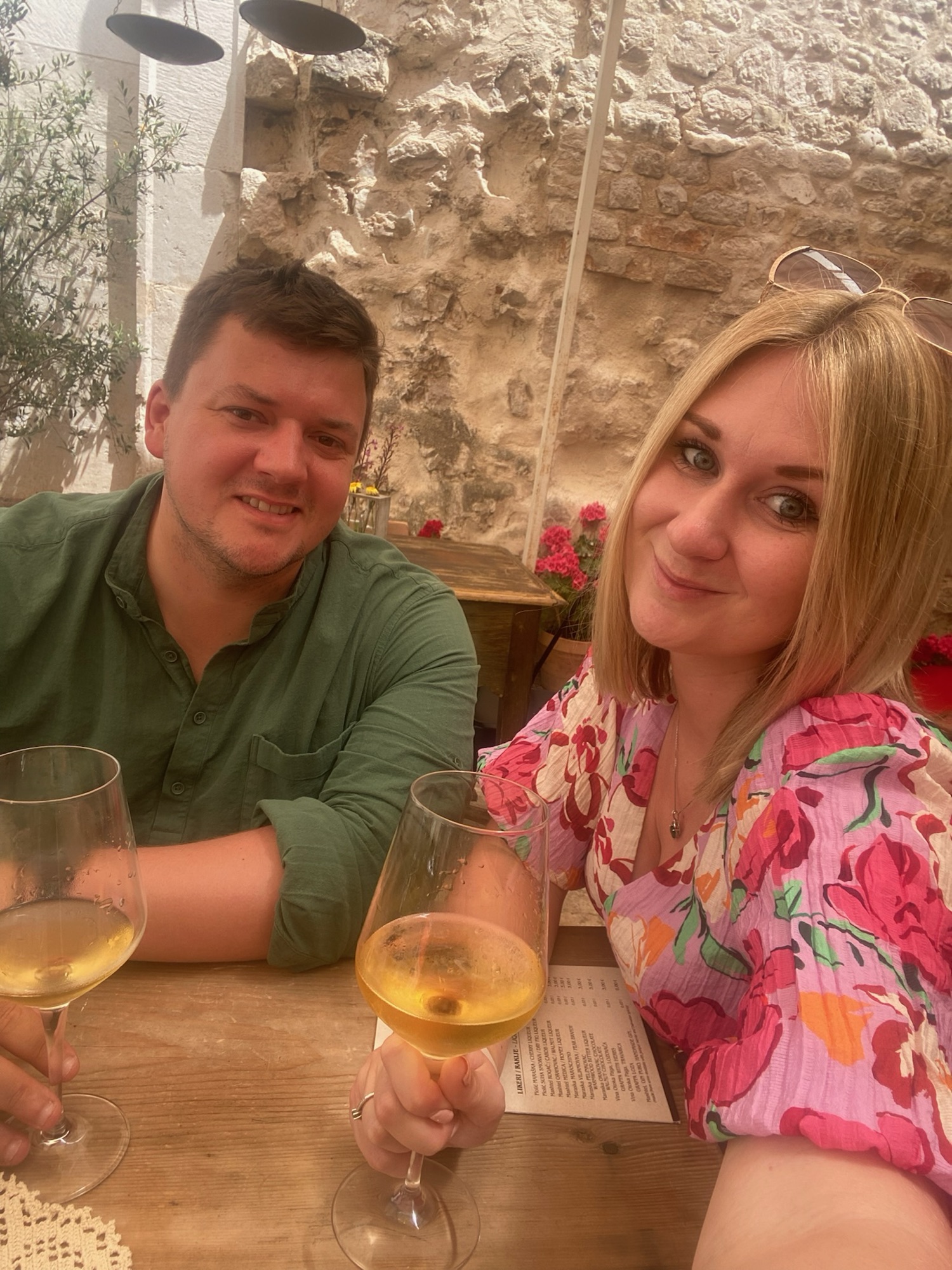
We ended up sharing an excellent burrata and salami sandwich alongside a glass of muscat each, and it was probably our favourite moment of the entire visit.
Corsican food has a slightly different character from mainland French cuisine. There are strong Italian influences, plenty of cured meats, local cheeses and chestnut products, but it still feels distinctly its own thing.
The market captures that perfectly. It is busy without feeling chaotic, atmospheric without feeling manufactured, and exactly the sort of place where you accidentally spend far longer than intended. To be clear, it’s not overly large – but just has a great atmosphere. It actually really reminded us of our trip to Zadar which had a similar space!
Corsican Beer, Gin and Szechuan Pepper Somehow Worked
At one of the bars near the centre, we tried a local blonde beer mixed with gin, Szechuan pepper and a collection of other ingredients that sounded like they absolutely should not work together.
But they did.
Corsica has a surprisingly strong local beer culture, with breweries such as Pietra becoming closely associated with the island. Pietra itself is particularly known for using chestnut flour in brewing, reflecting the importance of chestnuts within Corsican food culture.
The drink we had leaned much more experimental, but it somehow suited Ajaccio perfectly. Relaxed, slightly unusual, and much more interesting than another generic lager in the sun.
A Quiet Stop at the Palais Fesch Gardens
We also spent some time around the gardens and courtyard area of the Palais Fesch, home to the Palais Fesch and the city’s fine arts museum.
The museum itself contains one of France’s largest collections of Italian paintings outside the Louvre, thanks largely to Cardinal Joseph Fesch, Napoleon’s uncle.
We did not spend a huge amount of time inside, but the surrounding area was a pleasant place to pause for a while during the heat of the afternoon.
Ajaccio has quite a few moments like that. Small squares, shaded courtyards and palm-lined spaces where the city briefly slows down.
What We Didn’t Do in Ajaccio
We skipped some of the more heavily Napoleon-focused attractions, including Maison Bonaparte, the Bonaparte family home. Not because they are not worthwhile, but simply because we are not especially fascinated by that era of history.
If Napoleonic history is your thing, Ajaccio probably becomes a much deeper and longer visit than it was for us.
We also did not make it out to the Îles Sanguinaires, the rocky island chain and lighthouse just outside the city, although it is only a short drive away and looked like one of the obvious additions if staying longer. The islands are particularly well known for sunsets and coastal scenery.
Is Ajaccio Worth Visiting?
Yes. Particularly as part of a wider Corsica trip.
Ajaccio does not necessarily feel like somewhere you need a full week, unless you are using it as a base to explore the surrounding coastline and mountains. But as a one-day stop, it works extremely well.
It is relaxed, attractive and easy to navigate. The food is genuinely memorable, the setting is beautiful, and there is enough history and culture to give the city substance without making it feel overly heavy.
Most importantly, Ajaccio feels comfortable in its own identity. It does not seem desperate to impress visitors.
And in a lot of Mediterranean destinations now, that is increasingly rare.
Other Things to Do in Ajaccio if You Stay Longer
We did not personally do these, but they are among the most commonly recommended additions if you have more time in Ajaccio:
- Visit Maison Bonaparte, Napoleon’s family home and now a museum
- Take a boat trip or drive out to the Îles Sanguinaires
- Spend more time inside the Palais Fesch museum collections
- Explore more of Corsica’s coastline and mountain villages from Ajaccio as a base
- Visit the Imperial Chapel adjacent to the Palais Fesch, where members of the Bonaparte family are buried