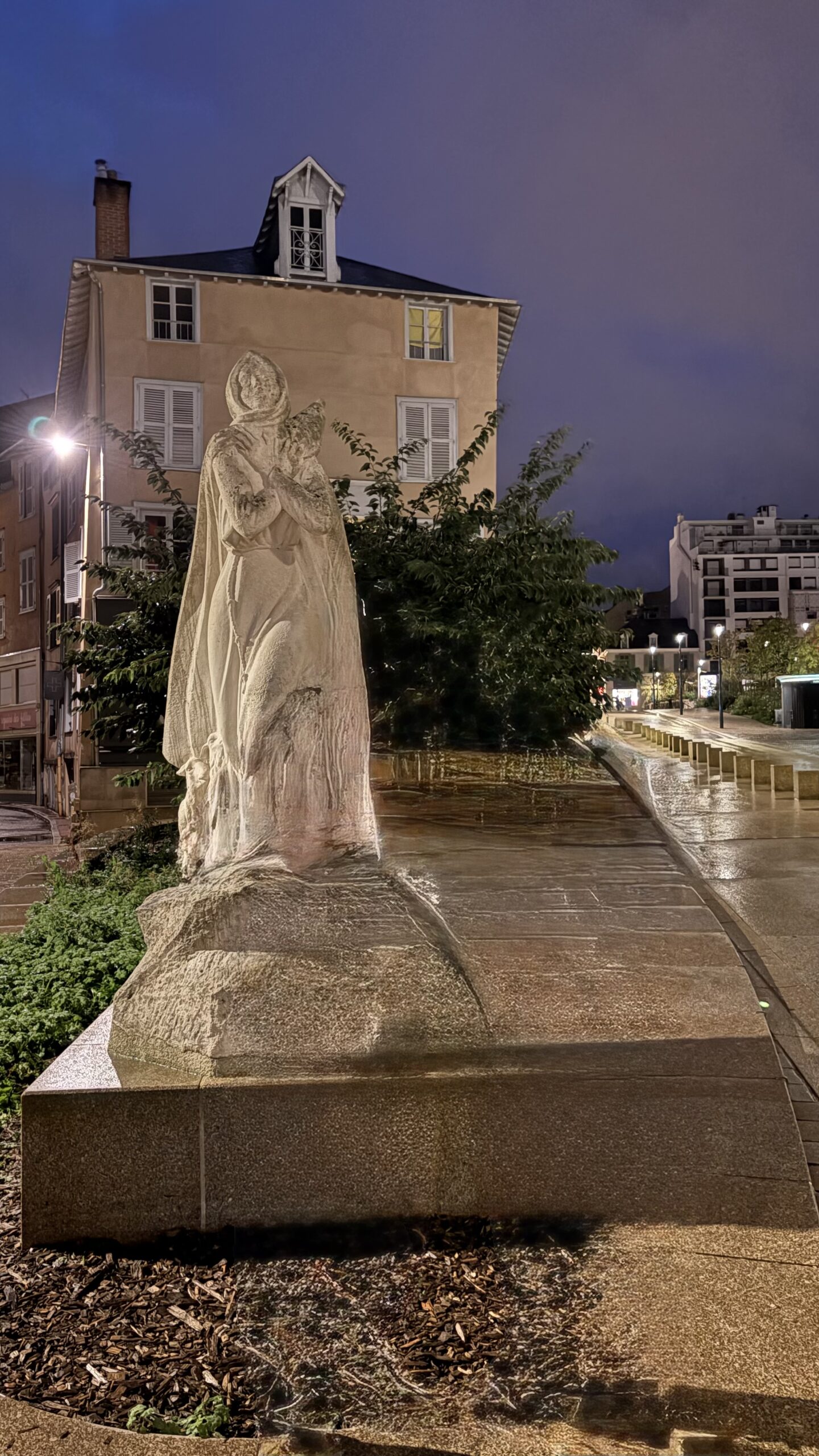
Elliot visited Limoges with a group of friends. We flew direct from East Midlands into Limoges – one of those budget routes you don’t expect much from, but it’s hard to resist when the flight’s cheap and the journey quick.
Skip to…
Modest Expectations
Limoges isn’t a top-tier French destination, and you can see why. It’s small, it’s quiet, and it doesn’t have the instant drama of Paris or Bordeaux. But that’s not to say it isn’t worth the trip.
Roman Roots & Porcelain History
The city’s roots stretch right back to the Romans, who founded it as Augustoritum on the River Vienne. You can still trace parts of that legacy in the layout of the streets and remnants of the old amphitheatre, which was once one of the largest in Gaul. Later, Limoges became famous for its medieval enamel work and, from the 18th century, for its porcelain – the fine white kaolin clay discovered nearby made it world-renowned.
Old Town Centre
Walking the old centre, you see all those layers stacked together. There are half-timbered houses leaning into narrow lanes, cobbled squares opening out into markets, and the Cathédrale Saint-Étienne, a mix of Gothic ambition and 19th-century completion. The Jardin de l’Évêché, just next to the cathedral, is a lovely terraced space that looks down towards the river – neat beds, shady trees, and views that slow you down. Even the railway station is a landmark: the Bénédictins station, with its glass dome and clock tower, is an Art Deco showpiece.
Beef. Lots of Beef.
Then there’s the food. If Limoges has one defining flavour, it’s meat – particularly Limousin beef, from the rich red cattle bred in the region. Butchers dominate the streets around the central market, their red awnings and window displays impossible to miss. Eating here means hearty portions: thick steaks, slow braises, terrines. Even a simple bistro lunch is centred on meat, served with little fuss and lots of flavour.
Worth A Day or So
Limoges doesn’t put itself forward as a headline act, and that’s part of the truth of it. There aren’t endless sights to tick off, and it’s not built around tourism in the way the bigger French cities are. But it’s precisely that unpolished, everyday quality that makes a visit interesting. It’s a working city with history under its feet, proud of its craft and cuisine, and happy to let you find it at your own pace.
A couple of days is plenty – enough to wander the streets, eat well, soak up the cathedral and porcelain heritage – and then move on. Limoges isn’t a must-see in France, but it is a reminder that sometimes those cheap flights open up places you’d never otherwise think to visit. And when you do, you discover a city that may be small and understated, but still has stories worth hearing.